AI Search Optimisation for Australian Businesses: A Practical SEO & GEO Strategy
Search is no longer just about getting your website onto the first page of Google.
A homeowner in Brisbane might ask ChatGPT how to compare solar installers. A property manager on the Gold Coast could use Google AI Overviews to research local contractors. A business owner in Melbourne might ask Gemini which digital marketing approach is worth investing in.
These customers aren’t necessarily looking for ten websites to browse. They’re looking for clear answers, trustworthy information and businesses worth considering.
For Australian businesses, that changes how online visibility needs to be approached.
AI search optimisation is about making your business easier to discover, understand and evaluate across traditional search engines and AI-powered search experiences.
It doesn’t mean abandoning SEO or chasing shortcuts to appear in ChatGPT. It means strengthening the foundations of your online presence while adapting your content and marketing strategy to the way people now research their options.
At Quokka Collective, we approach SEO and AI search as connected parts of the same customer journey. Here’s how Australian businesses can put that thinking into practice.
What Is AI Search Optimisation?
AI search optimisation is the process of improving your website, content and wider online presence so AI-powered search tools can more easily discover, interpret and reference accurate information about your business.
Traditional search engine optimisation focuses on helping websites appear in relevant organic search results.
AI search optimisation considers an additional question: what happens when an AI system helps a potential customer research, compare or shortlist businesses?
Several related terms appear in discussions about modern search:
- SEO (Search Engine Optimisation): Improving a website’s visibility in organic search results.
- GEO (Generative Engine Optimisation): Improving how business information and content may be discovered and represented in generative AI responses.
- AEO (Answer Engine Optimisation): Making information clear and useful for answering specific questions.
- AI SEO: A broad term describing SEO practices in an environment increasingly influenced by AI-powered search.
These aren’t entirely separate strategies. Strong technical foundations, relevant content, clear business information and a credible reputation can support several forms of online discovery.
If you’re exploring the practical differences, our guide to improving business visibility in ChatGPT and AI search explains how mentions, citations and traditional search appearances differ.
How AI Search Changes the Customer Journey
The biggest change isn’t simply the technology behind search. It’s how customers explore their options before getting in touch.
Traditional Search: Customers Compare Websites
Consider someone searching:
“roof leak repair Gold Coast”
Google may present a combination of organic results, local business listings and advertisements.
The customer reviews several options, looks for relevant services and eventually contacts a provider.
Traditional search engine optimisation helps businesses compete for visibility when someone searches for their services, locations or related questions.
AI Search: Customers Explore Questions and Recommendations
Now imagine that same customer asking:
“What should I look for when choosing a roofing contractor on the Gold Coast, and how can I tell whether a repair quote is reasonable?”
An AI-powered search experience may explain relevant considerations, suggest follow-up questions and provide supporting sources.
Some AI systems retrieve information from web pages to help generate responses. Others use different combinations of retrieval, existing model knowledge and search technologies.
This means an AI-generated answer shouldn’t automatically be treated as an up-to-date or independently verified recommendation.
For businesses, however, the opportunity is clear: publish information that helps customers understand your services and make informed decisions.
Instead of focusing only on individual keywords, consider the broader questions customers ask throughout their buying journey.
SEO vs GEO: Understanding the Difference
Although SEO and GEO are often discussed as competing approaches, they share many of the same fundamentals.
| Factor | Traditional SEO | GEO and AI Search |
|---|---|---|
| Main objective | Organic search visibility | Visibility and representation in AI-generated responses |
| Typical discovery | Search results and local listings | AI answers, comparisons and source references |
| Content approach | Search intent, relevance and quality | Clear, credible and contextually useful information |
| Technical requirements | Crawlability, indexing and website structure | Platform-dependent retrieval and accessibility requirements |
| Performance indicators | Organic clicks, enquiries and conversions | Mentions, citations, identifiable referrals and enquiries |
Traditional SEO continues to matter.
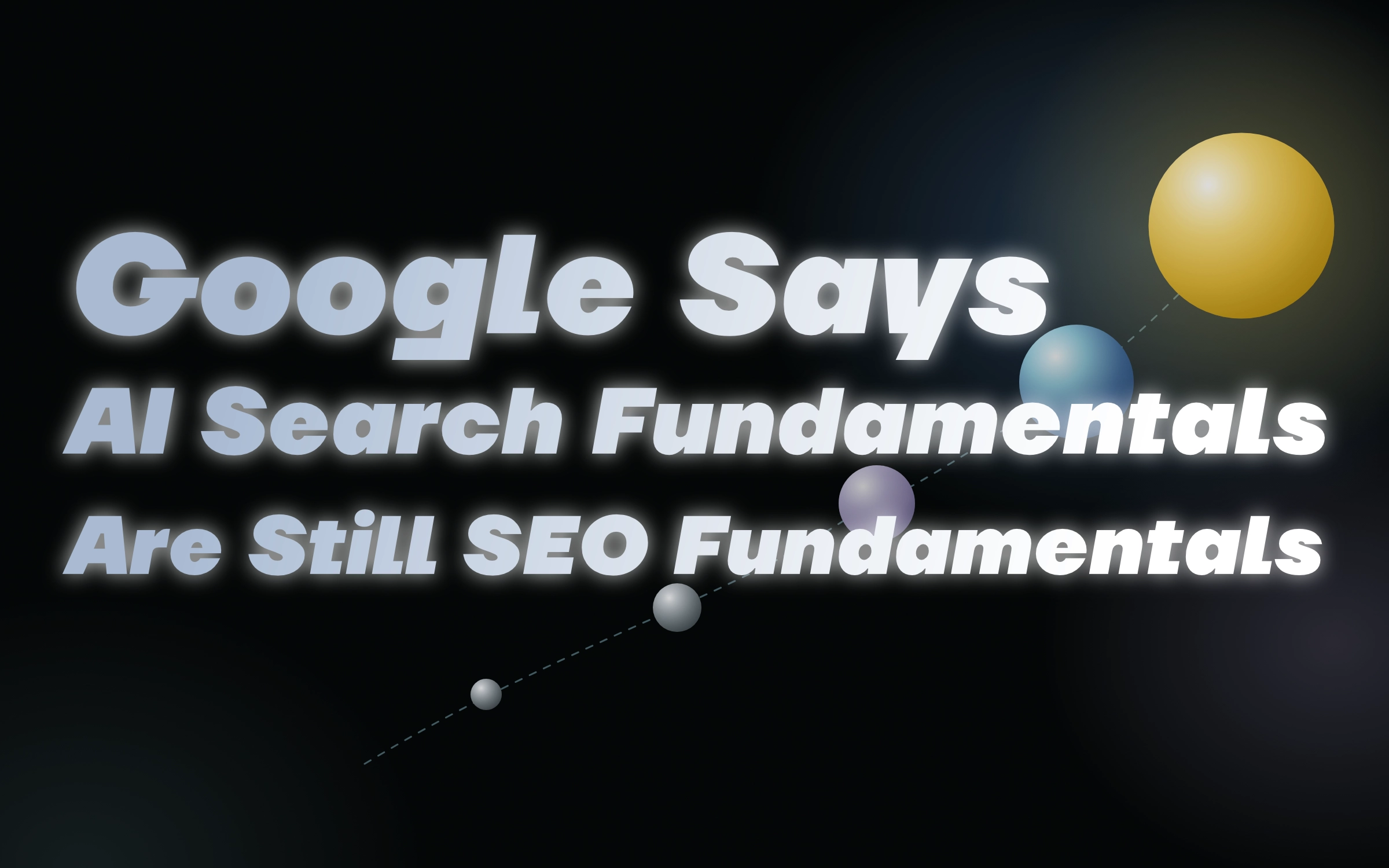
Google has confirmed that its established SEO recommendations remain relevant to AI Overviews and AI Mode. There is no separate optimisation technique that guarantees inclusion.
Good SEO provides a valuable starting point, while GEO broadens the focus to how information about your business may be used in AI-assisted discovery.
For a closer look at the underlying principles, read our article on why Google’s AI search features still rely on established SEO practices.
1. Start With a Clear Business Identity
Before investing in advanced AI search strategies, make sure your business is easy to understand.
Ask yourself:
Could someone visiting your website for the first time explain what you do, which customers you serve and where you operate?
A generic message such as:
“We deliver innovative solutions tailored to your needs.”
doesn’t provide much useful information.
Compare that with:
“We provide residential roofing repairs, roof restoration and gutter replacement across the Gold Coast, including Southport, Labrador and surrounding suburbs.”
The second example identifies the services and locations clearly.
This matters because a business needs to be understandable before customers can confidently evaluate it.
Strengthen Your Business Information
Review the consistency of information across your website and relevant external profiles.
Pay attention to:
- Your business name and contact details
- Core services and areas of expertise
- Actual service locations
- Team members and relevant qualifications
- Industry specialisations
- Business descriptions across directories and profiles
For Australian service businesses, a well-maintained Google Business Profile can be an important part of that foundation.
Keep the information accurate and update it when your services or coverage change.
2. Build Content Around Customer Decisions
Publishing articles simply because they contain high-volume keywords isn’t always an effective content strategy.
The better question is:
What does a potential customer need to understand before choosing our business?
Consider a residential pool builder operating in Queensland.
Potential customers may ask:
- How much does it cost to build a pool in Queensland?
- Should I choose a fibreglass or concrete pool?
- What approvals are required before construction?
- How long does installation usually take?
- What maintenance expenses should I expect?
Each question relates to a genuine purchasing decision.
A useful content strategy would connect these topics to the company’s main service pages.
For example, an article explaining the differences between fibreglass and concrete pools could naturally guide readers towards a relevant installation service.
This helps the customer move from general research to evaluating a provider.
Match Content to Search Intent
Not every question deserves the same type of page.
An informational query such as “How long does a pool installation take?” may suit an educational article.
A search such as “pool builders Brisbane” usually indicates stronger commercial intent and may be better addressed by a dedicated service page.
A comparison query may need detailed explanations, pricing considerations and practical examples.
Understanding these differences helps avoid publishing multiple pages that compete for the same purpose.
The aim is to build a content journey that supports customers from their first question to their final enquiry.
3. Create Topical Depth Through Connected Content
One article rarely answers everything a customer needs to know.
A structured group of related pages can provide more comprehensive guidance.
This approach is often called a topic cluster.
For example, a solar installation business might build content around the central subject of residential solar systems.
Supporting topics could include:
- Solar installation costs in Australia
- Solar panel sizes and household energy requirements
- Solar batteries and storage options
- Installation warranties
- System maintenance
- Factors affecting solar performance in Queensland
Rather than leaving these articles disconnected, the business can link them to relevant service pages and to one another where the relationship is useful.
This helps customers explore a subject without having to restart their research.
It also makes the site’s organisation clearer.
At Quokka, we apply the same principle to our own educational content.
For example, business owners exploring the impact of automation on search can read our article on what agentic SEO means for business leaders.
Building topical depth isn’t about publishing content at any cost. It’s about covering relevant subjects with enough clarity, evidence and practical detail to be genuinely useful.
4. Write Content That People Can Understand and Trust
A page can contain hundreds of relevant keywords and still fail to answer a customer’s question.
Clear communication matters more than simply increasing keyword frequency.
A helpful article should explain the topic early, use descriptive headings and give readers practical information they can apply.
Consider this sentence:
“Technical SEO helps search engines discover, access and understand important pages on your website.”
It’s specific and understandable.
Compare it with:
“Our advanced digital optimisation ecosystem transforms online visibility through innovative technological solutions.”
The second statement sounds sophisticated but communicates very little.
Use Clear Content Structure
Good content organisation can include:
- A direct explanation of the main topic
- Descriptive headings and relevant subheadings
- Examples connected to real situations
- Tables for meaningful comparisons
- Short, focused paragraphs where appropriate
- Supporting evidence and source references
- Relevant internal links that help readers continue their research
Some AI retrieval systems work with smaller sections of information rather than treating every document as one uninterrupted block.
However, retrieval methods differ across platforms. There is no universal paragraph length or formatting formula that guarantees an AI citation.
The practical goal is to make information clear and useful.
Don’t Overlook Search Snippets
How your content appears in traditional search results also matters.
A well-written page title and meta description can help users understand whether a result meets their needs.
Meta descriptions aren’t a direct Google ranking factor, but they remain a useful part of presenting your content.
For practical guidance, explore our article on writing effective meta descriptions and understanding their role in search.
5. Demonstrate Experience and Credibility
When customers compare businesses, claims alone rarely provide enough confidence.
Evidence helps.
Imagine two construction companies offering renovation services.
One website says:
“We are Australia’s leading renovation specialists.”
Another explains its completed projects, renovation process, team experience and relevant qualifications.
It also includes genuine photographs and customer feedback.
The second company gives customers more information they can verify.
Useful credibility signals include:
Real project examples: Explain the customer’s requirements, the work completed and the outcome.
Team expertise: Identify relevant qualifications, licences and professional experience where applicable.
Customer feedback: Display authentic testimonials and reviews without altering their meaning.
Original content: Publish examples, insights and explanations based on genuine knowledge of your services.
Transparent business details: Make contact options, locations and processes easy to find.
These principles are consistent with Google’s emphasis on helpful, reliable, people-first content.
They also support customers who are comparing providers through multiple channels.
6. Get Your Technical SEO Right
Even useful content may struggle if search engines cannot properly access your website.
A practical technical SEO review should cover several areas.
Crawling and Indexing
Check whether important pages can be accessed by search engine crawlers and whether they are eligible for indexing.
Review robots directives, canonical tags, server responses and indexing errors.
Different AI-powered platforms have different access and retrieval arrangements, so the requirements of one search engine shouldn’t automatically be applied to every AI tool.
Mobile Experience and Site Performance
Australian customers frequently research services using mobile devices.
Your website should load efficiently, display information clearly and make contacting your business straightforward.
A phone number that’s difficult to find or a quote form that doesn’t work can undermine an otherwise effective search strategy.
Internal Linking
Internal links help readers discover useful supporting information.
For example, a service page can link to an educational article explaining a common customer concern. That article can then guide readers towards the next relevant step.
Links should be descriptive and placed where they genuinely help the reader.
Structured Data
Structured data can help supported search systems interpret certain types of page information.
For example, relevant markup might describe a business, a service or an article.
However, structured data should accurately reflect visible content.
Adding FAQ schema or another markup type doesn’t guarantee AI recommendations, citations or enhanced search appearances.
For businesses reviewing these foundations, our SEO services cover technical improvements, content structure and search visibility as part of a broader strategy.
7. Build Brand Recognition Beyond Your Website
A company’s online reputation isn’t limited to its own domain.
Customers may also encounter the business through:
- Relevant industry publications
- Professional associations
- Google reviews
- Local business listings
- News coverage
- Community recommendations
- Professional partnerships
For example, a Gold Coast construction company featured in a reputable local renovation publication may reach homeowners researching renovation options.
An accounting practice contributing expert commentary to a relevant Australian business publication may strengthen its professional visibility.
These activities can create referral opportunities and support wider brand recognition.
The emphasis should be on genuine relevance, not purchasing low-quality links or creating artificial brand mentions.
Digital PR, consistent brand communication and useful public information can complement an existing SEO programme.
8. Make Local Search Part of Your AI Search Strategy
Local relevance matters for businesses that serve specific regions.
A homeowner searching for emergency plumbing in Southport needs a provider who actually works in Southport.
A Brisbane business looking for commercial air conditioning maintenance needs accurate information about service availability and coverage.
AI-powered discovery doesn’t remove these practical considerations.
For local businesses, useful priorities include:
- Accurate Google Business Profile information
- Genuine service-area descriptions
- Useful pages for relevant locations
- Consistent business contact details
- Customer reviews
- Examples of local projects and experience
Avoid producing large numbers of near-identical suburb pages.
A page targeting a specific location should offer genuinely useful information relevant to that area.
For trades and home-service businesses, local visibility works best when it is connected to a clear service offering and an easy enquiry process.
Our approach to marketing for trades and home-service businesses reflects the importance of attracting the right local customers, not simply more website visits.
9. Understand How AI Search Platforms Differ
ChatGPT, Google AI Overviews, Gemini and Perplexity can all help customers research information.
However, they shouldn’t be treated as identical systems.
Google AI Overviews and AI Mode
Google’s AI search features use its broader search infrastructure and can provide links to supporting websites.
Traditional SEO recommendations remain relevant.
Google does not require special AI-only schema to make a page eligible for these experiences.
ChatGPT
ChatGPT can help users compare services, understand unfamiliar subjects and research business options.
When web search is available and used, it may retrieve information and reference online sources.
Being indexed by Google doesn’t automatically guarantee that a business will be mentioned by ChatGPT.
Gemini
Gemini supports various research and conversational tasks, with available information sources and features depending on the product and context.
Clear and credible business information remains a sensible foundation.
Perplexity
Perplexity commonly presents answer-focused results with supporting source references.
Accessible, useful and verifiable information may be considered where relevant, but inclusion is never guaranteed.
For a deeper discussion of these platforms, see our guide to visibility across ChatGPT, Gemini and Google’s AI search experiences.
10. Measure What AI Search Actually Contributes
A common mistake is treating every AI mention as a meaningful business result.
A single screenshot showing a company in an AI answer doesn’t demonstrate consistent visibility.
Responses can change depending on the query, platform, time, location and other contextual factors.
Instead, businesses should monitor several indicators together.
| Metric | What It Tells You |
|---|---|
| Organic enquiries | Whether search visibility is producing business opportunities |
| Qualified organic traffic | Whether relevant audiences are finding the website |
| AI referral traffic | Whether identifiable AI platforms are sending website visitors |
| Brand mentions | Whether the business appears in selected AI responses |
| Source citations | Whether AI answers reference the business’s content |
| Lead quality | Whether enquiries align with the services the business wants to sell |
Track Customer Outcomes, Not Just Visibility
An increase in organic traffic isn’t always valuable if those visitors never become potential customers.
Similarly, a brand mention in an AI response may be useful for awareness without creating a directly measurable website visit.
That’s why businesses should look at search visibility alongside enquiries, conversions and customer quality.
Our article on measuring SEO’s contribution to revenue across complex customer journeys explores why last-click reporting doesn’t always tell the full story.
A Practical AI Search Optimisation Framework for Australian Businesses
You don’t need to rebuild your entire marketing strategy overnight.
A sensible approach is to identify what already works, address the most important gaps and improve systematically.
Step 1: Audit Your Website
Review your technical SEO, important landing pages, navigation, search visibility and enquiry pathways.
Identify crawlability problems, outdated information and pages that don’t clearly explain their purpose.
Step 2: Review Your Business Information
Check that your services, locations, experience and contact details are accurately described across relevant channels.
Make sure your business positioning is consistent.
Step 3: Understand Your Customers’ Questions
Speak with your sales team or the people who handle customer enquiries.
Identify what customers ask before requesting a quote, booking a service or choosing a provider.
Use these insights alongside keyword research and search performance data.
Step 4: Improve Your Commercial Pages
Strengthen the pages most closely connected to your business objectives.
Explain what you offer, where you operate, how your process works and what customers should do next.
Step 5: Connect Supporting Content
Publish articles that address genuine information gaps.
Link relevant guides to the appropriate services and connect related articles when they naturally support one another.
Step 6: Strengthen Trust Signals
Review testimonials, business profiles, relevant industry listings and real project examples.
Correct outdated information and remove unsupported claims.
Step 7: Measure and Refine
Track organic enquiries, qualified traffic and relevant AI search observations.
Use the data to guide future improvements rather than chasing every new optimisation trend.
For businesses that need help prioritising the work, our GEO and AI search services combine modern search considerations with practical visibility and credibility improvements.
Why SEO, GEO and Website Design Need to Work Together
Customers don’t experience your business through separate marketing departments.
They may discover your company on Google, compare providers using an AI tool, visit your website, read reviews and return later to request a quote.
Each interaction shapes their decision.
A strong SEO strategy can help your business appear for relevant searches.
Useful content can answer questions and demonstrate expertise.
A well-designed website makes it easier to understand your services and take the next step.
Credible reviews and consistent branding can reinforce confidence.
These elements work better when they support the same business objectives.
That’s why Quokka Collective connects SEO, AI search optimisation and website design around the customer’s journey from discovery to enquiry.
The goal isn’t simply to appear in more search experiences.
It’s to help the right customers find your business, understand what makes it relevant and feel confident enough to get in touch.
Frequently Asked Questions About AI Search Optimisation
What is AI search optimisation?
AI search optimisation involves improving your website and online information to make your business easier for AI-powered search systems to discover, understand and potentially reference. It builds on many established SEO principles.
What is the difference between SEO and GEO?
SEO focuses on improving organic search visibility. GEO considers how information may appear or be referenced in AI-generated answers. The approaches overlap in content quality, accessibility and business credibility.
Is traditional SEO still important in 2026?
Yes. Search engines still need to discover, assess and present relevant information. Google’s published guidance confirms that established SEO best practices remain applicable to its AI search features.
Can AI search optimisation guarantee a ChatGPT recommendation?
No. There is no reliable method to guarantee that ChatGPT or another AI platform will recommend a particular business. The sensible approach is to improve the accuracy, accessibility and usefulness of business information.
Does structured data help with AI search?
Accurate structured data may help supported search technologies interpret information, but it doesn’t guarantee AI mentions or citations. Google does not require special GEO-specific markup for its AI search features.
Should small businesses invest in GEO?
It can be worth considering, particularly when customers research and compare services before making contact. The priority should usually be reliable SEO foundations and useful content rather than expensive, unproven tactics.
How can I measure AI search visibility?
You can monitor representative AI queries, brand mentions, citations, identifiable referral traffic and resulting enquiries. AI responses vary, so observations should be evaluated over time rather than from isolated tests.
How long does AI search optimisation take?
There is no fixed timeframe. Outcomes depend on competition, existing website quality, relevant content, technical accessibility and the platforms being measured.
Be Found, Be Understood and Be Chosen
Search is evolving, but the fundamentals of earning customer trust haven’t disappeared.
People still want accurate information, credible businesses and straightforward ways to make contact.
AI-powered search adds more ways for customers to explore those decisions.
At Quokka Collective, we help Australian businesses connect their visibility, content and digital presence around real business outcomes.
Whether you need stronger organic rankings, a clearer website or a practical approach to AI-powered discovery, the starting point is understanding what matters most for your customers.
Talk to our team about your current search visibility and where your next improvements could make the biggest difference.